
Why Two People Experience the Same Event Differently
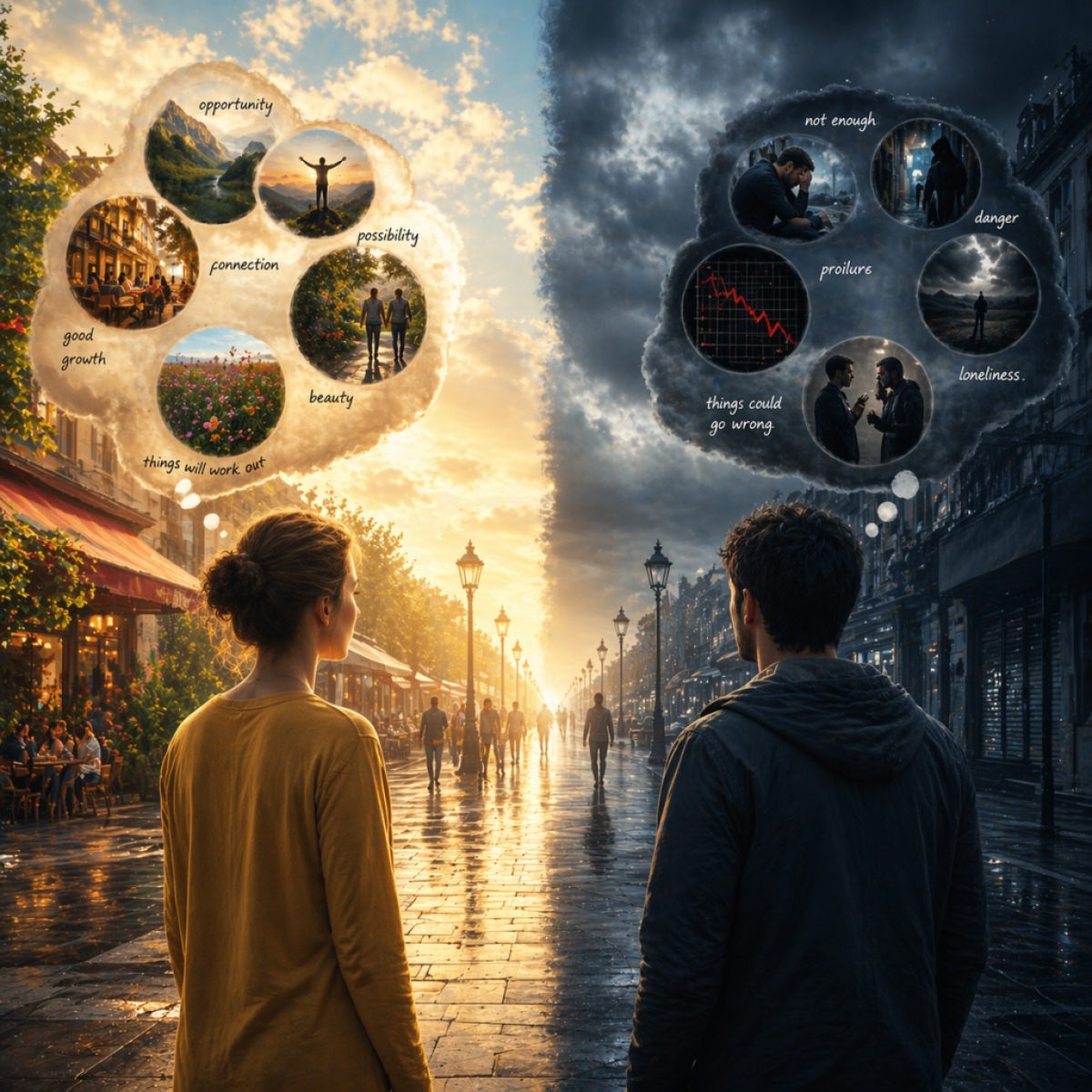
Have you ever walked away from a situation feeling completely certain about what happened… only to find that someone else experienced it in a totally different way?
Same conversation. Same moment. Same external facts.
But two completely different interpretations.
What this feels like in real life
You leave a conversation feeling certain about what was said…
and later realize the other person experienced it completely differently.
You replay the moment in your head…
and it still feels obvious to you.
But something doesn’t quite line up.
In those moments, it feels like there must be a “right” version of what happened.
But look closely.
What you experienced wasn’t just the event.
It was your interpretation of it.
This is one of the most common—and most misunderstood—experiences in life.
People often assume that if two individuals were present for the same event, they must have experienced the same thing.
But they didn’t.
They experienced their interpretation of it.
This builds directly on why people see the same situation differently, but here we take it one step further.
It’s not just that people see differently.
It’s that meaning itself is created internally—and that meaning can vary dramatically from person to person.
Why the same event produces different experiences
When something happens, your mind does not simply record it like a camera.
It actively interprets it.
That interpretation happens quickly, often automatically, and is influenced by:
- Past experiences
- Emotional associations
- Beliefs about yourself and others
- Expectations about how things “usually go”
So even though the external event may be the same, what it means is not fixed.
One person hears a comment and feels criticized.
Another hears the same comment and feels supported.
One sees silence as rejection.
Another experiences that same silence as space.
Same moment.
Different reality.
Why interpretation happens so quickly
Your mind is designed for speed and efficiency.
It cannot process every detail consciously, so it relies on patterns.
It looks for what feels familiar. It organizes new information based on what it already understands. It assigns meaning in a way that allows you to respond quickly.
This is helpful in many situations.
But it also means that much of what you experience is shaped before you have time to question it.
That is one reason two people can genuinely believe they are “right” while seeing completely different versions of the same event.
Related: Explore communication breakdowns
Also Related: Why You Keep Seeing the Same Situation the Same Way
The role of internal filters
At the center of this is what can be thought of as an internal filter.
This filter determines what gets noticed, what gets ignored, and how something is interpreted.
It is built over time.
And once it is established, it tends to operate automatically.
This is why two people can walk into the same situation with different expectations and come out with those expectations reinforced.
The mind tends to confirm what it is already organized to see.
Related: The Hidden Filter Behind Every Decision You Make
Why misunderstandings are so common
Most misunderstandings are not caused by bad intentions.
They are caused by different interpretations being mistaken for objective reality.
When someone believes their experience is “what actually happened,” it becomes difficult to recognize that another person may have experienced something entirely different.
This is where conflict often begins.
Not because one person is right and the other is wrong.
But because both are seeing through different internal structures.
Why this matters in relationships and communication
Understanding this changes how you relate to people.
Instead of assuming shared meaning, you begin to recognize that meaning is created individually.
This does not mean everything becomes uncertain.
It means there is more space for curiosity.
More room to ask:
“What did that mean to you?”
“What did you experience in that moment?”
And sometimes:
“What might I be missing?”
That shift alone can change the quality of communication dramatically.
How this connects to decision making and behavior
The way you interpret events influences how you respond to them.
If something is interpreted as a threat, you react defensively.
If it is interpreted as an opportunity, you move toward it.
If it is interpreted as proof that something is wrong, it reinforces doubt.
So even though behavior appears to be a response to “what happened,” it is often a response to what something meant to you.
And that meaning is shaped internally.
Related: Why You Only See What You Already Believe
What begins to change when you see this clearly
Once you begin to recognize that interpretation is happening, something important shifts.
You are no longer completely inside the experience.
You are also observing how the experience is being created.
This does not mean you stop having reactions.
It means those reactions are no longer the only thing available to you.
You begin to notice:
- What you assumed
- What you added
- What you may not have considered
And in that awareness, new responses become possible.
This is one of the ways people begin to move beyond feeling stuck in the same patterns.
Related: The Real Reason You Feel Stuck
Related: The Pattern Behind Every Limiting Belief You Have
Because once you see that the meaning is not fixed, you are no longer limited to the same interpretation.
And when interpretation changes, experience begins to change with it.
If something in this felt familiar…
This is where it changes →
Frequently Asked Questions
Why do two people experience the same event differently?
Because each person interprets events through their own filters, beliefs, and past experiences. The event may be the same, but the meaning assigned to it can be very different.
Is perception the same as reality?
No. Perception is how your mind interprets reality, not reality itself. It is shaped by past experience, emotional patterns, and learned expectations.
Why do misunderstandings happen so often?
Misunderstandings often happen because people assume their interpretation is the same as what actually occurred, while others may have experienced something entirely different.
Can interpretation change?
Yes. When you become aware of how you are interpreting events, you can begin to see alternative perspectives and respond in new ways.
If something in this felt familiar…
If you’ve ever been certain about what happened…
and then realized someone else saw it completely differently…
If you’ve ever replayed a moment…
and couldn’t understand how it was interpreted another way…
This is why.
Because what you experience isn’t just what happens—
it’s how your mind organizes it.
And when that structure doesn’t change,
the same kinds of misunderstandings can keep repeating.
Rob Mitchell is the creator of Manifesting Your Future, a transformational process designed to help people create real change through alignment of beliefs, values, and emotional patterns.


